No Gravity, Only Expansion: Satellites Don’t Orbit the Earth—It’s an Illusion.
Gravity Without a Force:
Conservation of Expansion Freedom and the Impossibility of Singularities
What if every orbit, every free fall, every spinning neutron star, and every black hole follows from a single sentence — and singularities are simply impossible by the same logic?
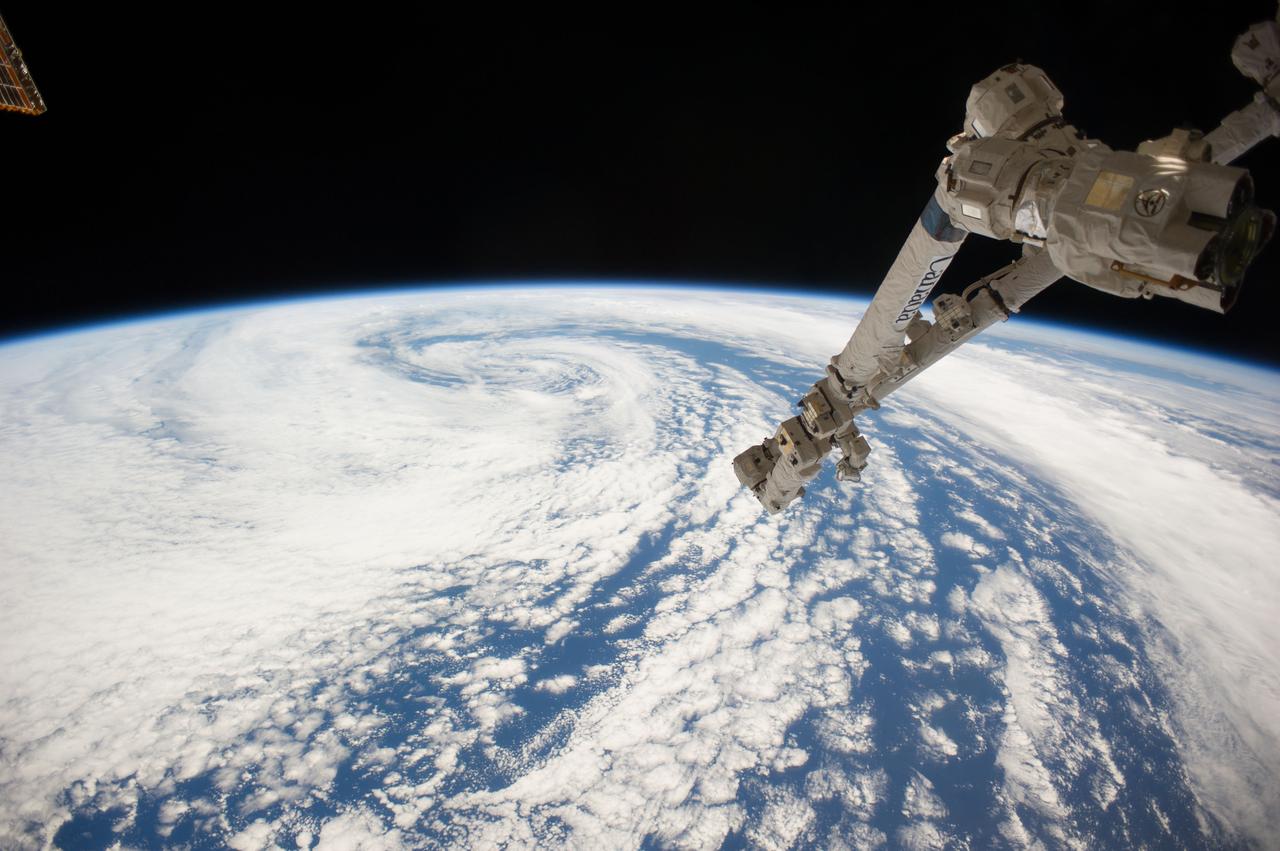
The International Space Station orbits Earth at 7.9 km/s. Astronauts inside feel nothing — no weight, no push, no pull. Now imagine a merry-go-round the size of Earth, spinning at the same speed. A rider on its rim would be crushed by a centripetal force five times stronger than surface gravity.
Same speed. Same circular path. Entirely different physics. Understanding why is the entry point into everything v6.4 of the Expansion Freedom Theory establishes.
The one physical fact
Matter expands more slowly than space
Hubble established that space expands. The Expansion Freedom Principle adds one further observation: matter, held together by binding forces, expands more slowly than the surrounding space. The difference between the two expansion rates is what has historically been called gravity.
From the mass's own reference frame, it expands outward toward any nearby object at a rate of GM/r². A freely moving object does nothing. The mass expands. If the object moves too slowly to stay ahead, the mass catches up — that is what we call falling or orbiting. If the object is fast enough, the mass cannot catch up, and the object escapes.
This reframes the entire history of celestial mechanics. No force is transmitted. No curvature mediates. The mass simply expands, and everything else follows its natural path in the geometry that expansion defines.
The astronaut on the ISS is not caught by Earth's expansion — the station moves fast enough that Earth never catches up. The astronaut follows a completely natural path and feels nothing. The merry-go-round rider, by contrast, is held by the structure of the ride, forced away from their natural path. That force is felt as crushing weight. One motion is inertial; the other is as non-inertial as a motion can be.
The natural-motion principle
Three levels of inertia — and a sealed-box test
v6.4 formalises what counts as natural motion through a hierarchy of three conservation conditions and a single experimental test.
L2: r² v_t² = L² = const (suppression × freedom conserved)
L3: L_total = const (all forms of freedom conserved)
The sealed-box test is simple: a passenger in a windowless, sealed box undergoing that motion feels no force of any kind. If they feel something, an external force is acting.
| Motion | L1 | L2 | Sealed-box | Natural? |
|---|---|---|---|---|
| Galilean inertia | ✓ | ✓ | ✓ | Yes |
| Circular inertial motion (r_balance) | ✓ | ✓ | ✓ | Yes |
| Free fall (L = 0) | ✓ | ✓ | ✓ | Yes |
| Elliptical orbit | — | ✓ | ✓ | Yes |
| Rest on Earth's surface | ✓ | ✓ | ✗ (feels weight) | No |
| Ball on a string | — | formal only | ✗ | No |
The inversion from Newton is total. Free fall and orbital motion are the natural, inertial states. Standing on the ground is non-inertial — the surface prevents you from following your natural path inward as Earth expands toward you. Weight is the felt evidence of that prevention, not of a gravitational pull.
General Relativity arrived at the same classification (free fall = inertial) through spacetime curvature. Here the justification is direct: space expands; matter lags; whatever follows the expansion freely is in the inertial state.
All orbits unified
Two conserved quantities classify every path
The conservation law r²v_t² = L² = const — Kepler's second law in its deeper form — applies to every path near a mass. Its physical meaning: r² is the area of suppression (how strongly radial expansion freedom is withdrawn at distance r); v_t² is the expressed freedom in the tangential direction. Their product, the total expansion freedom in circulation, is constant because no external force acts to change it.
Paired with the energy E = v²/2 − GM/r, the sign of E alone classifies every possible trajectory:
| Object | L | E | Path |
|---|---|---|---|
| Light (v = c) | ≠ 0 | > 0 | Hyperbola (deflects, escapes) |
| Fast flyby | ≠ 0 | > 0 | Hyperbola |
| Escape velocity | ≠ 0 | = 0 | Parabola |
| Planetary orbit | ≠ 0 | < 0 | Ellipse |
| Circular orbit | ≠ 0 | < 0 | Circle |
| Free fall | = 0 | < 0 | Line segment (e = 1) |
Free fall is not a special case — it is the L = 0 limit of the same ellipse family (eccentricity e = 1). Light deflection and planetary orbits are not two separate phenomena; both are paths bent by slower expansion near the mass, with speed alone determining whether the path closes or remains open.
No gravitational force is required at any point on this spectrum. Two numbers, L and E, are sufficient.
Neutron stars and stellar fate
Angular momentum as the primary determinant
When a star collapses to a neutron star, its radius decreases by a factor of roughly 70,000 — from about the Sun's radius (~700,000 km) to about 10 km. From r²v_t² = L²:
r decreases ×70,000 → v_t increases ×70,000
25-day solar rotation → millisecond period
Consistent with fastest observed pulsar: 716 Hz (Hessels et al. 2006)
No special spin-up mechanism is needed. The conservation law does it automatically.
This makes angular momentum L a primary determinant of stellar fate, equal in importance to mass. The minimum collapse radius is r_min = L/c. If this radius exceeds the Schwarzschild radius 2GM/c², a black hole cannot form regardless of how massive the star is.
r_min is large. Collapse halts before the Schwarzschild radius. Result: neutron star / millisecond pulsar.
Expansion freedom partly ordered, partly disordered. Result: red supergiant, core-collapse supernova.
Complete expansion freedom released as photons. Result: gamma-ray burst candidate, extreme collapse.
r_min → 0. Maximum collapse. But physical bodies always carry some thermal or radiative freedom (L_total > 0), preventing this.
Rotation, heat, and radiation are not three different categories. They are the same expansion freedom expressed in different currencies — ordered, disordered, and photonic — with L selecting which currency dominates.
The singularity problem
Why r = 0 is physically unreachable
General Relativity's singularity is not a bug to be patched; it is a logical consequence of its architecture. GR retains the causal structure of a force: mass → curvature (mediator) → motion. When mass concentrates without limit, the mediator diverges. The Hawking–Penrose theorems prove this rigorously under GR's premises.
The Expansion Freedom Principle has no mediator. Mass is a record of local expansion lag — not an agent that influences spacetime. The premise of the Hawking–Penrose theorems is simply absent.
The dynamical argument is independent and equally clean. Every form of expansion freedom — rotational, thermal, radiative, linear — can be expressed as an equivalent tangential velocity v_eq. Define the total equivalent angular momentum L_total from all these contributions. Since v_eq ≤ c:
Since v_eq ≤ c:
r_min = L_total / c > 0 always
Even a non-rotating body carries thermal and radiative expansion freedom, so L_total > 0 for every physical body. The radius r = 0 is unreachable. The question of what happens at a singularity — which has driven decades of quantum gravity research — does not arise here, because singularities cannot form.
| General Relativity | Expansion Freedom | |
|---|---|---|
| Mediator? | Yes (curvature) | No |
| Singularity structurally possible? | Yes | No |
| Hawking–Penrose applicable? | Yes | No (premise absent) |
| Dynamical barrier to r = 0? | Needs quantum gravity | r_min = L_total / c > 0 |
| Extra assumption needed? | Quantum gravity (unresolved) | None beyond v ≤ c |
Where it all connects
One sentence, every phenomenon
The table below shows how every familiar physical concept becomes a face of a single principle.
| Concept | Expansion Freedom reading |
|---|---|
| Mass (E = mc²) | Frozen expansion freedom |
| Gravity | Matter expands more slowly than space; slower expansion bends nearby paths |
| Weight | Surface preventing free fall — not a pull |
| Free fall | Most natural state; nothing acts |
| Orbital motion | Natural path shaped by local a_matter; no force required |
| Heat | Disordered expansion freedom |
| Radiation / photons | Pure, unsuppressed expansion freedom |
| Explosion | Liberation of frozen freedom at bond-breaking |
| Singularity | Impossible: r_min = L_total / c > 0 |
The series began with one geometric correction: applying a spherical surface to a disk galaxy overstates dark matter. It grew into a diagnosis: GR's retained mediator structure makes dark matter and dark energy inevitable corrections to an inherently misspecified framework. v6.4 extends the logic to its limit — no mediator means no singularity, no information paradox, and no need for quantum gravity to rescue the theory from its own divergences.
The predictions are concrete. Fast-rotating pre-collapse stars should preferentially produce neutron stars; slow-rotating ones should produce black holes or gamma-ray bursts. No compact object should have a radius below L_total / c. Both are testable against existing pulsar and supernova remnant catalogues.
The full derivation, with all propositions and numerical verifications, is in the paper linked above.
The most counterintuitive claim — and why it is correct: two perspectives on the same orbit
Of all the ideas in this theory, one tends to provoke the most immediate scepticism: the claim that Earth expands toward a passing satellite. If Earth is expanding outward, shouldn't it be moving away from everything — including the satellite?
The answer requires distinguishing two things that are easy to conflate: the direction of expansion, and what that expansion looks like relative to a chosen reference. Both Earth and the satellite are expanding outward. But space expands faster than either of them, and that single fact makes the same physical situation look completely different depending on which frame you stand in.
The universe perspective (v6.0 – v6.3): everything is moving apart, yet clumping
In the universe perspective, the reference is the expanding space itself. Space expands at H²r. Earth expands too — but more slowly, held back by its own binding forces. The satellite, being a small piece of matter in free motion, expands along with space at nearly H²r.
So Earth and the satellite are both moving outward — but space is moving outward faster than either of them. Relative to space, both Earth and the satellite are lagging. And because Earth lags more (it is more massive, more bound), the gap between Earth and the satellite — as measured against the expanding space background — is shrinking. They appear to converge, not because anything pulls them together, but because space is running away from both of them faster than they run away from each other.
This is why, in the universe perspective, matter appears to clump. There is no attraction. There is only a three-way race in which space wins, and the two slower contestants end up closer to each other than to the winner.
The satellite stays in orbit rather than falling because it moves fast enough tangentially. It keeps outrunning Earth's lag. If it slowed down, the convergence would win and it would fall. If it sped up past escape velocity, it would join the Hubble flow and drift away with space.
The mass perspective (v6.4): Earth reaches outward, the satellite outruns it
In the mass perspective, the reference is Earth itself. From this frame, we ask: what does Earth do toward a passing object?
The answer is direct. Earth — like all matter — expands. But it expands more slowly than space. From Earth's own frame, that deficit shows up as an outward reach toward nearby objects at a rate of GM/r². Earth is not pulling the satellite in; Earth is expanding toward it.
Now, Earth also expands in the direction of the broader space — but in this frame we set that aside and focus only on what Earth does relative to the passing satellite. Earth's expansion approaches the satellite at GM/r². The satellite is moving fast enough that Earth's expanding surface never quite catches up — so the satellite stays in orbit. If the satellite were stationary, Earth would catch it — that is free fall.
Two effects arise as Earth expands toward the satellite. First, the approaching face of Earth pushes the satellite's path slightly inward — a direction change. Second, as Earth's expanding surface gets closer, it subtends a wider angle from the satellite's perspective — a flattening effect that adds a second, equal deflection. These two effects (identified in v6.1 as the two equal contributions to light deflection, each giving 2GM/bc²) repeat continuously as the satellite moves, bending the path into a closed ellipse.
Meanwhile, Earth itself looks stationary. This is because Earth's own outward expansion is completely overwhelmed by the faster expansion of the surrounding space. Relative to space, Earth is contracting — its matter is losing ground. The net result is that Earth appears to sit still while the satellite orbits peacefully around it.
Same physics, two descriptions
| Universe perspective (v6.0 – v6.3) |
Mass perspective (v6.4) |
|
|---|---|---|
| Reference | Expanding space | Earth (the mass) |
| Core equation | amatter = H²r − GM/Aeff | aexpansion = GM/r² |
| Why objects converge | Space outruns both; both lag behind; their mutual gap shrinks relative to space | Earth expands toward the object at GM/r² |
| Why orbit forms | Satellite's tangential speed keeps outrunning Earth's lag | Satellite moves fast enough that Earth's expansion never catches it; repeated deflection closes the path |
| Why Earth looks still | Earth lags space, but that lag is uniform in all directions — it looks like a stationary clump | Earth's own expansion is real but invisible — space expands faster around it, making it appear stationary |
| Free fall | Object lags space less than Earth does; gap between them closes | Earth's expansion catches the stationary object |
| Best suited for | Large-scale structure, rotation curves, Hubble tension, time dilation | Orbital mechanics, free fall, weightlessness, neutron star spin-up, singularity impossibility |
Neither perspective is more fundamental. The mass perspective is the universe perspective re-expressed in Earth's own rest frame. The underlying physical fact — space expands faster than matter, and the deficit is GM/r² — is identical in both.
Satellite: →→→→→→→→→→→→ (rides with space)
Earth: →→→→→→→→→ (slowest — bound matter)
Relative to space: Earth and satellite both lag → appear to converge
Relative to Earth: Satellite outruns Earth's expansion → stays in orbit
Earth to observer: looks stationary (space runs away faster than Earth expands)
The apparent paradox dissolves once the three-way comparison is clear. "Earth expands toward the satellite" and "Earth and satellite converge because space outruns both" are not two different claims. They are the same differential expansion rate, described from two different vantage points. Pick either one: the orbit comes out the same.
The next paper in the series identifies the single correction that dissolves dark matter, dark energy, and the Hubble tension simultaneously. H²r is not the full expansion of space — it is the difference between spatial and matter expansion. Newton saw the near limit. Hubble saw the far limit. They were looking at the same equation.
Read v6.5 on Zenodo →


Comments
Post a Comment